


Biote Nutraceuticals DIM SGS + Hormone + Detox 60 Capsules
Biote Nutraceuticals DIM SGS + Hormone + Detox 60 Capsules
👦Buy one and get 5% off
👧Buy two and get 10% off
🧒Buy three items and save 20%
BUNDLE & SAVE
Couldn't load pickup availability

Biote Nutraceuticals DIM SGS + Hormone + Detox 60 Capsules
- Hormonal Support: Formulated to align with the body's natural cycles and maintain balanced hormonal health.
- Appetite Management: Designed to help moderate cravings and foster mindful eating habits through metabolic support.
- Gentle Cleansing: Aids the body's own natural processes in clearing routine metabolic waste.
- Focused Nutrition: Utilizes a specialized blend to help enhance the absorption and use of essential nutrients for daily health.


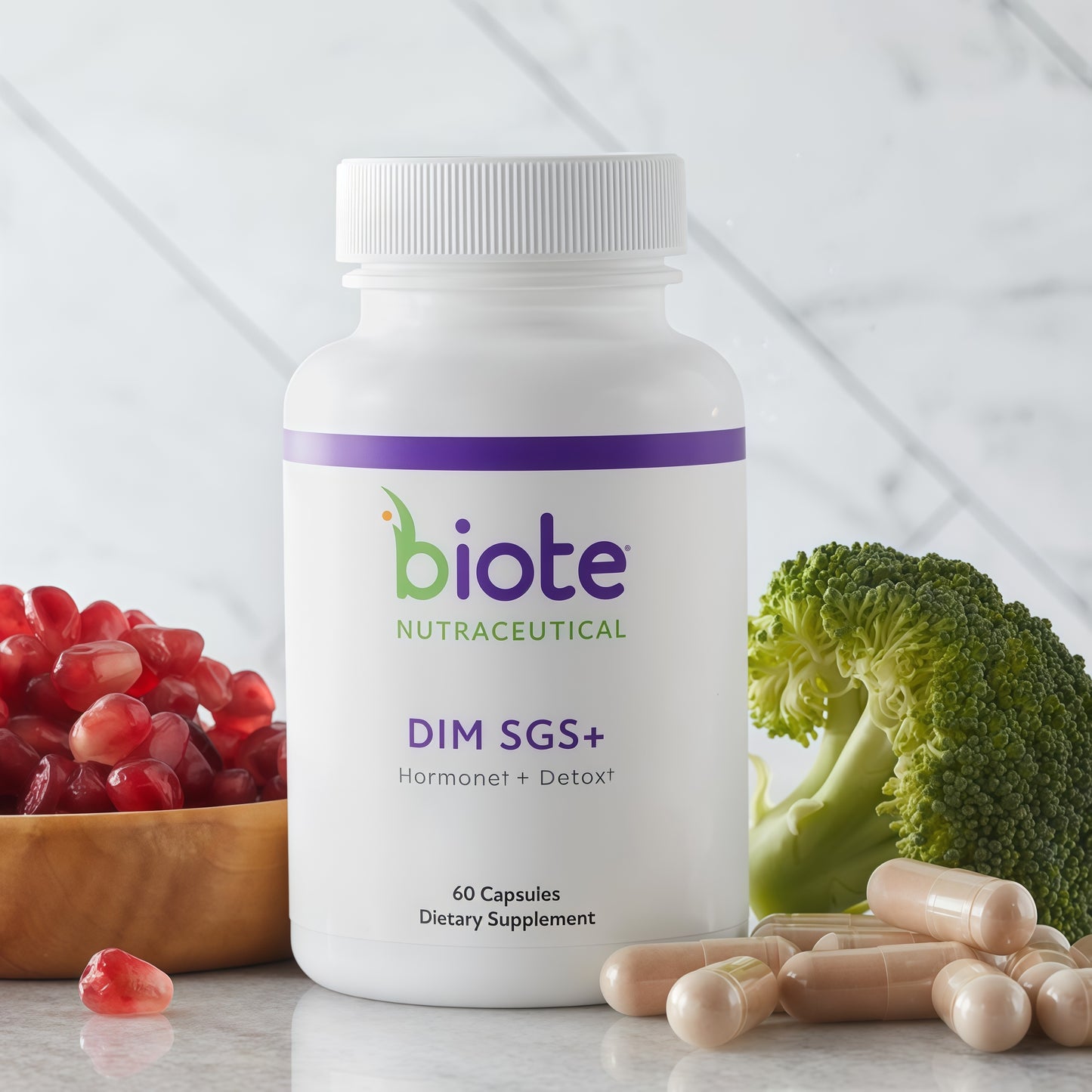
The Science Behind Biote DIM SGS+
This nutraceutical contains extracts from broccoli and pomegranate that may support the healthy utilization of estrogen in both men and women.
When we age, declining testosterone levels often lead to a relative increase in estrogen. Elevated estrogen is associated with adverse health effects, including a greater tendency for weight gain, bloating, fluid retention, and related health concerns. Research indicates that individuals with higher estrogen levels face an increased risk of these conditions.

DIM (diindolylmethane) is a compound known to support hormonal balance. Derived from natural sources such as broccoli and pomegranate, it differs from plant-based estrogens like soy isoflavones, as it does not mimic estrogen. Instead, DIM is understood to promote the healthy metabolism of estrogen, contributing to the maintenance of favorable estrogen balance.
What Can Biote DIM SGS+ Do for You?
When this nutraceutical is taken daily, Biote DIM SGS+ may support weight management and be beneficial for breast, uterine, cervical, and prostate health.
What Can Biote DIM SGS+ Do for You?
When this nutraceutical is taken daily, Biote DIM SGS+ may support weight management and be beneficial for breast, uterine, cervical, and prostate health.

DIM SGS+
Hormone Balance & Detoxification Support
Encourages Normal Estrogen Metabolism
Helps Control Appetite
May Promote Detoxification

PRODUCTS YOU’LL LOVE
At Biote, we’re focused on changing healthcare for the better, and that starts by providing high-quality products that empower you to take control of your health. From maintaining hormone balance to boosting your energy and immune system, we’ve got a variety of health solutions to help you accomplish your wellness goals.
FAQs
1️⃣ What Is the Potential Advantage of Bioidentical Hormones?
1️⃣ What Is the Potential Advantage of Bioidentical Hormones?
Bioidentical hormones, such as the ones used by Biote, work with the body’s chemistry because they closely replicate the molecular structure of the hormones that normally occur within the body.
2️⃣ What Is Pellet Therapy?
2️⃣ What Is Pellet Therapy?
Biote Certified Providers receive training on bioidentical hormone replacement therapy in the form of subcutaneous pellets. These pellets are inserted into the upper buttocks area during an in-office visit after testing is done to determine the exact quantity of the hormone the patient requires. Every dose is customized based on a consultation and extensive lab work to ensure a patient receives the exact concentration of hormones needed.
Bioidentical hormones, such as the ones used in training by Biote, work with the chemistry of the body because they replicate the molecular structure of the hormones that normally occur within the body.
3️⃣ Is There More Than One Type of Pellet?
3️⃣ Is There More Than One Type of Pellet?
Yes, there are two major pellet therapy types: estrogen pellets and testosterone pellets.
4️⃣ What is Estrogen?
4️⃣ What is Estrogen?
Estrogen is a hormone that possesses many functions and occurs in the bodies of both men and women. In women, estrogen is commonly associated with reproduction—it prompts the menstrual cycle and develops the female body’s secondary sex characteristics. However, in both sexes, estrogen is responsible for many facets of bone health, cholesterol metabolism, and the thickness and collagen content of the skin.
5️⃣ What Are Estrogen Pellets?
5️⃣ What Are Estrogen Pellets?
Estrogen pellets are small cylinders that are custom compounded and composed of estradiol, a form of estrogen. Estrogen pellets may relieve emotional, reproductive, and non-reproductive symptoms. The most common administration for estrogen pellets is to help address the uncomfortable symptoms of aging in women.
6️⃣ How Do Estrogen Levels Change With Age?
6️⃣ How Do Estrogen Levels Change With Age?
In women, estrogen levels are reduced as they get older. Hormone levels in women drop most dramatically during perimenopause (immediately before menopause) and during menopause. In fact, after female menopause, many men may have higher estrogen levels than women. If a woman has had a radical hysterectomy involving the removal of both ovaries, her estrogen levels will struggle significantly, as the ovaries’ primary responsibility is estrogen production. Although adrenal glands produce some estrogen, as does fat tissue, this is often not enough to effectively balance and maintain women’s hormone levels.